Monday, July 10, 2023

SYEP Day 1 Week 1

 Name Game

1. Draw the name you want to be known by in graffiti style/bubble letters (Quick tutorial will be provided by Abby) on the paper covering the table - 5+ minutes

2. Answer these 4 questions next to your name: Your Pronouns/Something you like about yourself/Something you feel defines you, a word, a characteristic, a skill etc/Something you need to feel comfortable or safe in a shared space - 5+ minutes

3. Switch tables and where ever you land, look at the answers someone has provided as inspiration for how you will begin filling that person's name with colors and images. *add somewhere in the space around the name something else you feel is important for creating the kind of environment you would want to exist/work in - 5+ minutes

4. Switch tables, assess what is inside of this new person's name and see what you can add - maybe there is a story that needs to be completed, maybe you respond differently to this person's answers then the person who drew in it before you. Now begin adding what you feel this needs. *Add somewhere on the paper an important boundary for sharing space with others - 5+ minutes

5. Switch tables again - same process, final moments to engage with this new name and see where your voice can finish what has been started by others. What can you add? What does this need to feel finished? *Add somewhere on the paper one thing that makes you feel respected - 5+ minutes

6. Return to your name. Notice what others have filled it with and how they have responded to your answers. Are you surprised? What stood out to you about other peoples answers? Group conversation - 5 to 10 minutes


Inside/Outside

Split up into 2 groups. After 30 minutes, groups will switch, then come back together to discuss our conclusions as a whole team.

Outside group: 

go engage with the existing mural we are designing an addendum to - take your sketchbooks! Keep track of what you notice because we will need it later! Facilitator will ask questions to start and Apprentices will figure out what they think/fee;/believe about it. - 30 minutes

Inside group: 

Initial questions for everyone, including Facilitator to answer - 30 minutes

Why are you here and what do you hope to get out of this Summer program?

Is there a way everyone's hopes/expectations that were just named can get met? 

What do you think needs to happen to make sure of that - who's responsibility is it for different values that were named? Does anyone want to be in charge of making sure certain things happen, even if it means communicating to Facilitators that a need wasn't met?


Imagining a Client's needs, in this case with a mural:

Why would a client want a mural?

Since we are painting on a school, what kinds of things/images/ideas do you imagine might be important to a principle to have on their walls?

Who do you think the principal wants the mural to communicate with? What would they want it to communicate?

What do YOU think is valuable about having a mural on school walls?

What things/images/ideas do you think are important to include for the people the mural is meant to communicate with?

What kinds of ideas and images did you maybe wish you had access to in your school environments (current or previous)?

Is there space for what the client wants and for what you believe is important to both be addressed in a final product?

What might that look like?


Coming back together

What were some of the biggest takeaways from the Mural outside? Did both teams come to the same conclusion? What do we think the most important pieces are to incorporate into our design planning for the other side? What are some things we want to leave behind about the previous mural?

What stands out to anyone about our conversation about our wants and needs? Was anyone surprised at any point? What was it like to try and hold space for the client needs as well as your own?

Monday, July 3, 2023

Summer Media Checklist 2023 - What do I want to teach next school year?

Working document, may change as I go - I may be too exhausted to purchase supplies and test out until after SYEP ends in August - gonna try my best to try at least 1 thing a week and check it off.


Puppetry:

Casting - figuring out a quick, relatively simple and non-toxic process that is also potentially cost effective. I have a bunch of differently sized porcelain baby doll heads to practice on/with

Thai inspired shadow puppets - such a rich history to pull from, and I've been following a group that uses the small hand sized ones, as well as full body pieces - I want to really look at narrative structures and the use of sound/possible incorporation of dance as a natural intersection with powerful shadow shapes + somatic movement. Also need to build a portable theatre set up that is fairly indestructible and lightweight. Julie Taymor, deep study of puppetry in thailand is a great reference, especially the Lion King on Broadway puppets - great combination of dancers/simple shapes/simple mechanisms.

Animatronic/Mechanical functions - figure out some basic mechanical structures (all simple machines) that give an effect of being alive. I've been following an artist who uses found objects and simple movable parts to poetically imitate living functions like breathing, heart opening, crying - a lot of power and potential here, especially combined with powerful words and/or music. I'm thinking about constructing short films, though also being able to perform live, as each offers something so specific as an experience for both performers and audience. 


Printmaking:

Oil pastel transfers - Its a cool, quick trick but I gotta know what I want to use it for, so I am actually prepared to incorporate it into my lessons. The water resistant quality is also interesting, possibly combined with light sensitive cyanotypes?

Gel slab transfer - essentially making monotypes, can use magazine clippings, sharpie drawings, wipe out/layering methods etc - need to get one and just start playing. I like the idea of not needing to know how to draw to come up with something distinctly esoteric and professional looking - possible collab with fashion here as well. Making these single printed images wearable might be really valuable, they can even bring in a piece of clothing they want to print on, and I can show them some of the clothing I've printed on that lives in my closet. Also possibly making cards/zine covers/stickers is possible here.

Layered stencil prints - colored paint and sponges to create ghostly images that imply depth while also being graphic and quite simple - an exercise in media but mostly in composition. Great practice, also works well with fashion if that made sense to collab.


Sculptural:

Shoe modification - There's a huge bin of singular shoes @MFTA, I want to grab a bunch and spray paint them white, then have students plan out an approach/design - unsure as of yet what my design prompts will be, so I def need to do a mock up and see where it takes me. Could be a useful place to let students explore whichever of the techniques we had already explored in this form, so landing the skillset even deeper based on student curiosity.

Pinatas - exploring some kind of theme. Time to get back into paper mache play and think about what kinds of things we can sculpt images around and what to fill them with - great sharing moment to do the breaking, and lots of interesting emotional/political potential here, as well as a transformation - a 2 part piece with a requirement for physical engagement that steps into performance art territory.

Accordion Books/Zines - utilizing our quick themed sketches through the semester/year to create a narrative and weave our drawings into something new, painting and printing and layering on top of them - a way to allow everything we've made to be significant, a treasure trove to plumb of forgotten explorations that is secretly a testament to our growth over the year, like a scrapbook of the self. Pre-planning is important, about storing their sketches in a way that is easy and doesn't require a huge amount of time on my part. I will be making one so I can show them what is possible.


Specific explorations that are a direct response to bronx students this past school year:

A Bronx Landmarks coloring book - designing a coloring book to actually print where students choose their favorite aspects of the bronx and figure out how to represent it. This is an expression of a proposal I submitted for a Bronx based burrough wide scavenger hunt - I learned a lot this year that I need to incorporate into a new draft, as well as incorporate some of the student based explorations I did in Harlem this year. Even as the direction of the program is shifting, I still think there is a lot of potential groups that will find it interesting - I'd be very curious what students will come up with.

Choose-Your-Own-Adventure Graphic Novel + Board Game - I need to flesh out a structure for this so students aren't too overwhelmed to get to the end of a project like this, and I like the idea that depending on the group, I could go graphic novel OR board game - and once I have a structure, other people can use it but shift elements and have at least a semi predictable outcome. Also possible to do a bit of a collab either between a poetry class, or 2 classes responding to the same material but expressing 1 of both potential manifestations. I think the initial version will start in the Bronx and constantly refer back to it.

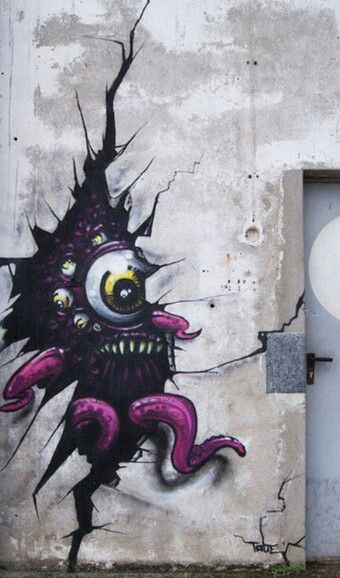
Making Monsters out of our biggest hurdles and fears - using case studies of other monsters and exploring what they might represent: Godzilla, Frankenstein, maybe bad guys like the Joker etc. Using pop culture to explore metaphor and safetly engage with the shadow parts of the self. Maybe there is eventually a transformation into something less scary, or we write backstories for why these monsters came into being etc. Lots of possible directions, need to get clear about what I want this exploration to explicitly address.

Mini recipe Zine - maybe an instruction manual for how we want to be treated/handled/respected etc - written component, graphic design/letter forms and small spot illustrations

Music Video Collab - Music production/Fashion/Theatre/Visual Art team up to do all the pieces


Important things to note:

Make a prompt bible - possibly with categories like Collaboration/Introspection/Shape Language etc

Make sure there are clear instructions and deadlines for each step of the way - trying to keep everything between 3 and 5 days till we move on to a new project

Sunday, June 25, 2023

Dreams aren't made in a movie studio. They're served by a woman in a hair net. Every night when we fall asleep we stand in line with a tray.

 Just a flicker, about the pervasive and subtle whisper of grief - and the mirror of another, where we see ourselves

my brother - the youngest of us

received a mysterious family heirloom delivered to the office in a brown towel the staff were too scared to lift up - his father's family had found him, trepidatiously reached out

and he accepted.

Tipsy, excited, a late night phone call after meeting with them - a million photos, going back to the 60's, more heirlooms, a run on sentence of people he had never met but had his face, he could recognize it in those physical images, suddenly a door opening up into the other part of where he comes from and lineages he carries/threads through time that didn't require access through the toxic, broken door of his father

Shock, that there was an earnest interest in knowing him - so different from the hungry gaze of our mother, looking for her own benefit

but also an awareness he expressed to me of not really being able to fathom their loving relationships with family they described to him - a subtle disconnection he noted to me on the phone, realizing he didn't have something they did.

Some context for the person his father was before sliding into addiction - as he talked I felt my childhood tormentor become slightly more 3 dimensional - the father of this man died at 26, and he watched a sibling die in a pool when he was too young to assist - grief was a component I hadn't really considered in the mess of that monstrous human being, and possibly a sense of needing or not having that underlay the cardboard sign he used to pretend being homeless to acquire money for drugs sometimes

My window to my father's side is gone - he was found dead in his apartment in 2019 and there were no friends or family to contact, until detectives finally found and reached out to my older brother, who hadn't seen or heard from him in over 3 decades. A dead end for us. My brother had called me after that and asked what I felt - nothing. I think that hurt his feelings, that maybe, deep down there was a fantasy or a kind of grief that I had long ago let go of but was fresh for him - I still feel like I failed him in that moment

And for all the years of my younger brother blowing off the idea of trauma or grief or anger, something about learning there might be a family waiting happily to receive him seems to have given him the safety to feel his rage at my mother for what she is and how she uses us, for the amount of 'dirtbags' in our family, as he described it to me

We ended up talking about when the ancient family cat died - one of the few creatures I think my older brother connected with, had physical contact with - mom had to call my younger brother to bury her because my older brother had locked himself in his room, so overwhelmed with grief - and it wasn't until my younger brother got over his immense rage at him for not being able to do it and hugged him - that our older brother finally broke down and cried. It is and is not about the cat, I know - it is about all of the loss carried in our lives that we have learned to ignore, bubbling up when a new fresh loss sweeps us under

So much grief. So much ungrieved emptinesses. Hoarding and drugs and false validation being used by all of these people to fill the holes we are pretending are not there

And the bittersweetness of ferocious joy I feel for my brother's new rooted potential, the rage and horror I feel that he couldn't allow himself to acknowledge how he feels about our family because at the same time he didn't want to lose what little connection he had, the familiarity of being confused by other people's warm emotional expressions of their familial ties, as well as the reminder that there is no warm curious family members waiting for me on the other side of a genetic door, like he has discovered he has.

Just vomiting it all up, so I can look at it - or pour over it later for clues and useful tidbits. I really am so tired of carrying this bullshit around like an identity. But, like the reality of my family, it is there and it is mine, I can't really lose it or let it go - like a bug or a balloon or a cold. It is more like a placenta, a dark twin that nourished me in the womb, feeding me my mother's toxic responses, stress horomones, broken dreams. We are what we are. I cannot pretend I came from somewhere else, or that I am unrelated, or that this is not my inheritance. That would leave me blind and make myself and others vulnerable to my own potentially unexamined and destructive coping mechanisms.

Monday, June 12, 2023

Graffiti Sticker Workshop Inspiration for I.S. 206B 6/14/23

Using mundane objects in unusual ways:


Inspo Questions:
What do you notice about the style and subject matter?
What are the similarities in these images? The differences?
How are backgrounds being treated?
How is color being used?


Making Questions:
What style and subject matter are you exploring?
How are you utilizing things that inspire or interest you?
How are you treating the background?
How are you planning to use color?


Process:
Look at inspiration, discuss as a group (5 minutes)
2 or 3 @2 minute brain wake-up exercises (5 - 7 minutes)
Use paper to sketch out ideas and single out what your sticker design will be (10 minutes)
Once you have a plan, receive your sticker/label - Sketch first, then color (15 - 20 minutes)
Clean up (5 minutes)


Friday, May 26, 2023

The more complex a translation, the more meaning it imparts.

“Gravity” means “the geometry of spacetime.”

March - June of 2019 

I was assisting one of my coworkers on their mural project in Bayridge with what felt like a million classes back to back of extremely energetic 4th graders. The mural was titled 'The Games We Play', something selected by the executive director and the principal with no student or teaching artist feedback. The idea, in such a deeply multi-cultural neighborhood, was that these young people would share stories and drawings of pastoral outdoor games played in some distant homeland that many of these children hadn't been to or left before they could remember much. When my coworker told the students the title of the mural they were going to help us design - in every single room, a million voices whispered 'Video Games!'. When asked what kinds of other games students knew or played, there was only your normal, all american run-down - basketball, soccer, jump rope etc. It is hard to describe the quality of helpless frustration we shared with how painfully out of touch the people in charge of decision-making were with what young people were actually experiencing. In a deft sidestep, my coworker had students do drawings of their favorite video game characters playing those outdoor versions - Optimus Prime playing soccer was my favorite drawing, after Greg, who only drew different kinds of sharks (I save a drawing of a hammerhead shark playing hockey that he made, for my next tattoo). When my coworker submitted the mural draft for approval (after a lot of hours translating their drawings into a final image which she had no idea, after years of working with this program, that she should have billed for) the principal responded by telling her that there will be no video game characters on the mural. Again my coworker pivoted and made the original characters into students with video game references on their shirts - but when students saw the final design, in every single class there was a cacophony of sad groans. The mural painting was painful, from a million unhappy 4th graders, being poorly supported by our company and met with constant issues created by our director that slowed us down coupled with pressure from him to finish.

Since then her work grows in such leaps and bounds, I am always so charmed by her style and ability to cocreate playful worlds with young people - but that was an important inflection point for us both as teaching artists.


January of 2020 

Another school in Bayridge, only I am the lead and my assistant is asleep half the time and eventually stops coming. 5 classes of 7th graders and the theme I was given by the director and principal, from a conversation I was not present at was Community. In all of the student spaces I had been in the different neighborhoods and burroughs, I noticed the young people I interacted with had very little experience outside of their neighborhood, especially in undocumented or lower income working families, and a lot of these young people were finding community through social media and online gaming, and also were drinking in global news/information at the same time - all of it surfacing randomly in our explorations as they processed their sense of the world and the things in it. In the spirit of this ultra modern and pretty ubiquitous experience of being a young person in developed countries - I proposed a mural exploring exactly that - how they reached out into the world from the safety of their homes and schools, using portals that live in both the digital and physical worlds, as well as imagining how we might represent our many connections to each other, like a web, or a tapestry. The principal immediately rejected it, telling me he was thinking like a dragon (for the large chinese population) and some sugar skulls (a mexican symbol he clearly thought applied to all of his latin american students) - you know, like the graphic appliques a dollar store sells for cultural holidays. Obviously I wasn't going to use his suggestions, because I knew the richness of what the students were going to come up with were going to be far beyond what he could conceive of. Pretty quickly I realized that almost 90% of my students didn't speak much english, and the word Community was actually quite a sophisticated concept for a new language learner. I was given 3 walls to cover and found a way to incorporate almost every student idea, and when I passed out the intial drafts - the phrase 'My Idea!' rippled through the room. When I took them to the principal for approval, he was floored (in a good way) - and later his only request was to change a section where a student had created an Intergalactic Community, of humans and aliens - I noted that particular subject to think about later, and the disconnect that he might have felt - and the next week, when we were supposed to start painting, the shut down happened. Suddenly all students in nyc were on screens all day for school, and I thought about how my first idea would have perfectly mirrored our reality. I replaced that girl's drawing with a treasure map of the neighborhood. She asked me why I changed it.


April 2022

5th graders this time, in the Bronx. The theme I chose to orient our drawings around Exploration - what tools do we use, what locations do we go to. Very quickly it became space focused, and I realized they were studying the Moon in science. As I listened to them, I was - how do I say this? - sharply attuned? to a reoccurring discussion about Elon Musk and his plan to colonize Mars, sophisticated queries about governments and sustainability and funding that have come to them through social media feeds. The narrative that emerged in our play was human children on Earth exploring their world, interacting with nature, growing a garden (the school has a community garden embedded in the playground) - and on the opposite side there are alien children doing the martian mirror of them - an incredible imagining that is structured with empathy, as well as a way to look at ourselves through imagining how we might be perceived by a completely foreign entity. Again, I am asked to remove the aliens - they became human children in the future, so the narrative wasn't broken, but again I am asked by the girl who first drew the alien girl - why was her drawing changed. The principal seemed nervous about the aliens being perceived by other adults in a way that felt uncomfortable and I make another mental note. Luckily we had a fantastic time painting together and I'm really in love with the outcome - it isn't my strongest mural, but with the wall and time constraints, it does a lot.


May 2023

Character design at a technical high school for graphic design. I was nervous about trying to start from scratch teaching something as sophisticated as photoshop (and illustrator, tho i haven't used it since college), and the school threw a lot of disruptions at us just as we were beginning to transition into digital formats. After a lot of floundering and frustration from students as they were being asked to draw in ways that lived really far outside of their comfort zone - the second I switched onto the computer I felt their quality of attention shift. The way they looked at the board, the sophistication of the questions they asked - it was like we were suddenly speaking the same language after then desperately trying to become fluent in a new one. I can't quite describe the kind of clarity that suddenly opened up between me and my students one we had entered into the digital realm. As I think back to that shift, I'm also remembering working with a student who was having a complete block about translating physical drawings to digital ones - this is my favorite part - is that computer programs force you to think in terms of shape and depth via layers. Painting is the exact same thing, and drawing should be as well - we are always trying to show 3 dimensional space on a 2 dimensional plane, but we learn to outline, so we think in outlines, and there is a huge intellectual shift that has to happen to grasp the difference. Contour lines are for living in a flat world composed of negative space on a 2 dimensional plane. Foreshortening, movement, torque, things embedded in environments and effected by gravity are motivated by 3 planes and we have to be able to map that 3rd dimension onto the flat surface of a page while drawing - in the computer you just make a new layer and move it closer to the top or farther in the back of the pile depending on where it needs to live to have the impact you want. I explained to my stuck student how i can use familiar textures, like sunlight on the bottom of a pool, as an overlay that sources in the viewer their own embodied awareness of every pool they have seen in a movie or jumped into, or like the jean and hair texture I dropped onto my chracter - we use our audiences awareness and experience of the world as a resource to communicate with them. Art is always necessarily a 2 way street, a CONVERSATION. If we didn't hope someone would see it and respond, would we bother making things?

I am reminded, however, of how the current flood of AI also sources the previous experiences and writing and thoughts in a very similar way, but without the yearning. I am thinking about how young people's brains are inherently different then mine because of growing up passing between digital and analog worlds in a way I very much did not. I had a typing class I hated in 6th grade, was given my first cell phone my freshman year of college. I grew up reading huge maps as a navigator for my mother, and when I moved to nyc in 2010 with my flip phone, I had to mapquest directions to places, write it all down and stumble around on streets I'd never been down trying to figure out up from down. It feels like there are a lot more known and knowable variables for them then there was for me - and while I have strong navigation skills and excel when given limitations - I think freedom from rules and boundaries means something very different for them then I could ever fully fathom - and not being able to see their destination when they have always been able to look up and know everything about where they might be going or what something will look like - is probably way more uncomfortable then I had really realized. That is something I can scaffold with more intention. But I'm just seeing a whisper, a glint of an idea. Gotta keep listening.

Watching the people in charge of young people stuff consistently make choices that negate or pastoralize into some romantic untruth their actual experiences of the world is something that I wish could be addressed in a way that our elders could receive without feeling the need to reject it. Someone born in the 20s and becoming an adult in the great depression has a completely different sense of themselves and the world compared to someone born after WWII and becoming an adult in the late 50s - that is a single generation. My college professors who were teaching us the business of art and design and setting us up to dive into the job market after college were all working adult illustrators in the 80s - before the internet. I graduated into the recession and a job market that looked nothing like what they told me.

There is a blindness and hierarchical hubris to the assumption that children know nothing and must be filled with our knowledge. This is exactly how all humans and in turn the AI that mirrors our conscious and unconscious biases keeps the failing and dehumanizing structures we claim to want to escape - exactly where they are. The world our young people are going to graduate into will look nothing like what we know - but we may not be able to even conceive of the difference to ever become aware we are living in separate realities. How do we weave the worlds together constructively rather then feeling the need to negate each other's experiences? How can those experiences support rather then destabilize each other?

Wednesday, May 24, 2023

Final Character Design Session @Chelsea CTE: We Made It!


Link for Video Pitches!


Transitioning from Traditional to Digital Media

 Script for student presentation @Culminating event 5/24/2023

Slide #1:

When we started this program, it felt like we were on a roller coaster. It was stressful and hard to work fast without relying on reference. While the process is nerve wracking – you eventually get used to other people seeing all of your mistakes and unfinished drawings.

Next Slide Please.

A really important moment, after exploring shapes, proportions and line of action – was breaking down anatomy and different facial expressions. Being able to rely on certain rules helped us feel safer and more sure of our drawings, and everyone in our group really got into how our bones make us shaped the way we are. Next Slide Please. Now that we understood basic proportions and how to use them to make more convincing bodies and faces, we could begin to explore how small details can completely change a character’s mood or general vibe.

Next Slide Please.

Now that we had a sense of what is possible, and a little more confidence – it was time to begin imagining and sketching a story for our characters to live inside of. Using storyboards helped make clear narratives that showed us who our characters were. Then we began doing iterations – multiple possible versions, making changes along the way that allowed us to make choices and get really specific and original, both with our stories and the character designs. It was exciting to imagine stories that would have an emotional impact on our audience.

Next Slide Please.

When we began design the environment our characters lived in, that was the first moment we were asked to bring our drawings to life on the computer. It involved a lot of experimenting, research and initial confusion and mental blocks for some of us. While it was a little uncomfortable at first, it was surprising how strong and impactful our environments were.

Next Slide Please.

After working everything out on paper, we had a much clearer and more thorough plan for how we wanted everything to look – so we weren’t just blindly working on a computer. Getting to translate our characters into a digital format was really clarifying, to see them fully embodied with colors and details that made them feel real and specific. It also allowed us to see the progress we had made in our ideas from initial sketch to final design. Since our school is graphic design focused, we all have certain kinds of experience working digitally and some familiar habits took over at times, shifting some of our original design details, but because the stories and worlds we had created were so clear, nothing was really lost.

Last Slide Please.

The whole process allowed us to explore things like characters and environments that go through a transformation, a variety of different underwater characters and environments, punishment from various ocean and sky gods, sea and land creatures that suffer from negative impacts to our climate, communities coming together in the face of destruction – all the kinds of stories that we would want to watch and read and play.

Thank you.

Sunday, May 21, 2023

Program Notes Part 1 (11 of my 18 weekly classes) + messy processing

9th graders in Harlem:

5 classes on Tues/5 classes on Thurs with 2 different teaching partners - this 12 week art program was designed to complement a freshman elective called Foundations, focused on supporting student transitions from previous environments into high school - and particular skill building in relationships. The school saw a need for a certain kind of skill development and did the work to make it real.

Initially students were interested in me and my presentations, but disinterested in the act of making. I added an extra brainstorming day to each of my projects - which was not originally built into the program - and found that to be a really important/successful addition. A lot of students initially froze and needed the support of an adult and a quality of curious attention to help break through internal boundaries around communicating their thoughts and feelings - a practice I understand needs to be built through time. Student output and intention was drastically different from beginning to end of this residency. A lot of disengaged students woke up in our process together - and I too got to practice a lot of things that I have mostly just done in rooms full of consenting adults that trusted me.

The program has been considered a huge success and will be extended next year on the condition that it is me doing it. The content teacher and I are already planning to build our curriculum together so the groundwork I am laying for students to build skills around knowing how to engage with themselves/their identities and utilize their sense of self as a resource for how they engage with the world can be embedded more deeply and across multiple disciplines/expressions.

This is currently going to be a second semester program, and even though this company pays me the least of everyone I work for - I will be reserving this time block because this has been the most developing experience I have had as a teaching artist thus far. The support in the structure of the existing elective, the way the school wants to be seen, and within the classroom via my partner teachers allows for the work I am doing to fully manifest in a way that I can begin to actually build on.


Puppetry with a Yeshivah School, Brooklyn - 4th and 5th graders in afterschool

My experience of afterschool generally is that all the sitting and being told what to do all day creates a burst of excess energy and wanting to play (processing their day - moving is one way we process everything) so I generally am trying to figure out the appropriate container that meets students where they are at energetically while also having a gentle direction. I do not believe that afterschool is about 'teaching' in a filling them with information sense. I was very unsure of what to expect with this group, and was pleasantly surprised to find an excitable but engaged body of students who were very excited to make things and try new stuff out. Everything I have brought to them they have jumped into in different ways, and when they start destroying it all, I know it is time to move on. This is a very industrious, skillful group and due to a large number of siblings, their communication styles are generally relegated to screaming everything to try to be heard over each other - so I get to skill build ways of setting limits and a tone within a community environment that does not mirror my experience - but also does not undermine their expression or way of being in a judgmental way. I am learning a lot here, and the adults in the room with me are also so open and receptive to what we are doing, we are exchanging curriculum ideas while they also craft alongside the students. 

A lot of social justice language/curriculum I have seen that engages with the concept of Community talks about it from a distance, or has students name theirs - without talking about what it means to be with others in that way, or more importantly - to do the work of building community in an embodied sense. Here, and also with my Harlem 9th graders - there is a clear sense amongst the young people that if they need support, they can reach out to me, because they know I am available in that way - non judgmental, curious, listening and letting them tell me what they need/where they might be stuck. "I" am a stand in for any adult, it isn't about me, as much as them having an experience of being able to trust, of being able to ask for support and receive it - having that experience is what helps us learn how to also give it later in life, and how to look for that quality in other relationships. This is what building relational capacities look like - not SEL checklists. And especially at this Yeshivah school, I am having the most concise feeling of community being built, of all of the places I am working at. Me getting to have this experience helps me learn what needs to be in place in less receptive environments for something like this to emerge.

I very much hope I get to do this residency again next year.


Every year I choose a theme to focus my practice for the entirety of that year - it helps focus me around something I'm trying to understand better via student response to the question, as well as give my curriculum a sense of direction. My theme/question this year was "What kind of world to we want to live in together, and how do we build it?". I have been researching and leaning in to things like Afrofuturism as a reprieve from dystopian/colonizing approaches to the future as dictated by sci-fi/cyberpunk commentary on humanity - trying to find places to imagine together, to play, to create joyful contexts. Across the board, in every burrough and in completely different school settings, students have communicated a kind of consuming fear and hopelessness about what is ahead of them, whether it be what feels like a pre-scripted life path with no room for deviation (to deviate seems to be taught as failing by schools rn), or the looming climate/economic collapse that the Pandemic highlighted - the sense of there being no resources left when they become adults. A few students directly told me they wished they could go back to the shut-down, being alone in their rooms with the whole world passing them by - or straight up not wanting to look into the future at all, even to imagine themselves there. 

One of my Programs paid for me to attend Face-to-Face, an Art teaching based conference put on by NYC Arts in Education Roundtable - and I def had some deeply illuminating experiences. Misty Copeland was the opening speaker, and there was a moment when she was asked by an audience member when she first found her voice as a dancer - and said it wasn't until she was asked by Prince to freestyle to a song, after years of training and moving up through the ranks as an extremely skillful dancer - he was the first person to invite her into trusting herself enough to move like she felt (Misty talking about collaborating with Prince) - and here is the tender space where my frustration with everyone's ideas and language about art are embedded. Some people/schools/coordinators sell a residency etc around the idea that students are learning marketable skills, and art for successfully engaging in capitalism is the literal opposite of learning art as resistance/liberation. Often teachers are telling students that art is supposed to be relaxing, that when we come in it should be fun, a break from work etc - the opposite of discipline, and art IS literally a discipline, is extremely effortful and the topic of social justice is inherently uncomfortable and requires a huge skillset of holding that discomfort in a group setting and being prepared for all the ways it might manifest - but no one is doing the nuts and bolts work of making sure we grow those skills to do the work even as teaching artists. All of this, from top to bottom is disjointed and none of the expectations I'm being given meet the needs of what I am actually in the room with.

Becoming aware of circumstances that hold someone back in society at a mass scale first and foremost comes with a measure of grief. At what point are we creating circumstances for students to skill build around experiencing grief? How do we scaffold lessons about the reality of what some of us are facing that can hold a sense of hopelessness or overwhelm that will come up for many of them, but without losing students in it completely? What do we actually want students to learn - and what kinds of real world responses can we show that are clear and effective? I have subbed classes teaching poetry about community and in every class at least one student gets overwhelmed and shuts down/sheds tears because the prompt inherently negates their experience of being held/supported or not by what they are being told IS their community. Lots of students have already learned to ignore anything that doesn't feel positive, a coping mechanism passed down from their caregivers - which waking up to the actual reality also threatens. So many of us are not given opportunities to learn how to hold the fullness of our experiences in a way we can functionally process - ESPECIALLY in historically unsupported communities - that not being able to hold grief and fear and anger and joy etc without being overwhelmed will get in the way of being able to make use of liberation when it does come. To make use of support functionally, without fear or hoarding, when it does come. Arts curriculum that doesn't begin with an intention before developing the practice to support that intention is just going through motions. When the portraits being done by a teaching artist with different groups of students look the same, year after year - what is anyone learning? The world is changing. What young people experience and need are changing. Hopefully we are growing and changing too - or we will just be in the way of progress.

I asked Misty Copeland a question as well. She has started a Bronx based dance program with just a few partnerships, and my question was comparing pre and post pandemic student responsiveness - I mentioned what I am perceiving as a 'resistance to effort' post pandemic and when I said that phrase, an 'mmmm' sound rippled quite clearly through the audience, I watched her notice and heard a note of panic when she told me she couldn't speak to my question because her program was too new - and one of the programs I was there with also talked about that emphatic audience response after that Q+A concluded. Someone even walked up and offered me a job at their program because I named that quality. It feels like there is a shift away from Work for the sake of Work, but also a frustration or confusion from adults that our young people are resisting the methods that reinforce capitalism. It feels like the people at the forefront of student voice and social justice based art also don't quite know what to do when the status quo is in the process of shifting. The narrative has not caught up with reality. If we are the arbiters of this new landscape - what resources are available in this slower paced, lowered productivity zone? How do we work with what is in front of us, without judging them for not being something else? How do we shift not just our expectations of the students, but also the expectations of our funders/partners for what student output looks like? For me the biggest fear is that there is not curiosity or joy in the making - even Play is necessarily effortful, but effort has been so incentivized that everything seems to require a prize or a grade to be considered worth doing - how too can I allow that to be true without being too frustrated to engage gracefully with it?

I think next year my teaching practice/question will be 'What are our Resources?". I failed in a lot of ways this year - but I don't like that word. Because I approach every residency as a question about what is in the room and how I might get more skillful at working with it, even the failures are hugely impactful on my developing teaching practice. Having Programs that I work for that are willing to acknowledge that sometimes things don't work, and that its ok, that I won't be punished are hugely important to supporting my ability to grow and learn - and I am so grateful for that right now. I understand that for some people this is merely a job and the frustration I feel about what I consider an inherent responsibility for anyone working with developing minds is a waste of my energetic focus. The ability to let it pass through me without distracting me from my intentionality is a skill I too am trying to build - and the more I connect with supportive, like minded people, the less space I have to worry about the gaps I see around me. I need to assess those gaps so I can address what I can, but do I need to carry the weight of the impacts and implications of those things so deeply?

After this year, I am going to overhaul all of the things I have taught previously - my sense of what is possible has drastically shifted since expanding into so many other burroughs and art modalities. I'm still not quite ready to write my teaching manifesto - but I am going to really lay out an architecture for my intentions before entering into the next school year.

Wednesday, May 10, 2023

Character Design @Chelsea CTE Week 13 - Final Stretch/Video Statements

Here is a crazy long list of suggestions from Creative Art Works about the different components of your Video Pitch - we are gonna talk through effective ways to work with something as detailed and specific as this to make each section feel more digestible. Depending on how much work needs to be done before getting to this part, we may talk though this thursday instead of wednesday - but it (as well as everything else) will be due by midnight of next wednesday. It's real my friends. The end is nigh.


***TECH SPECS***
1. Keep file size small to medium if your camera/software offers that option
   a. MP4 files at 720p are preferred 
   b. Some mobile devices will allow you to specify small or medium file size
   c. If you can’t control the file size or format, just submit what you have

CONTENT
1. Keep it Short. Two minutes max. Focus on the most important points.

2. Five things you have to say:
    a. YOUR NAME, school and grade.
    b. Tell us WHO your character is
    c. Tell us the main CONFLICT in your character’s life
    d. Tell us a bit about your character’s WORLD
    e. Tell us how the DESIGN ELEMENTS express your character


CONTENT DETAILS:
3. WHO your character is includes:
   a. Personality traits
   b. Special abilities
   c. Weaknesses

4. Tell us the main CONFLICT in your character’s life
   a. Fighting for survival?
   b. Looking for love?
   c. Trying to solve a mystery?
   d. Trying to defeat an evil super villain?
   e. Trying to hold down a job and raise a family?

5. Tell us a bit about your character’s WORLD
   a. Realistic, fantasy, sci-fi, historical, or magical realism?
   b. Does your character have friends, family, pets, or a sidekick?
   c. Does your character have enemies, a nemesis, a competitor?

6. Tell us how the DESIGN ELEMENTS express your character
   a. Costume: fashion, uniform, armor, life support system, etc.
   b. Props: weapons, tools, magic elements, transportation, etc.
   c. Body shape, color palette, patterns and textures, line quality, etc.
   d. Inspiration

BEFORE YOU RECORD:
1. Write notes or cue cards
   a. Half a page of text equals about two minutes of time
   b. Five or six note cards will cover about a minute of talking
2. Rehearse a few times before you record
   a. Only refer to your notes to stay on track
   b. Do NOT read directly from a script. You will sound stiff.

RECORDING THE VIDEO:
1. Consider asking a friend or family member to record you.

2. Good lighting helps!
   a. Record in a sunny room if possible.
   b. Windows should be behind the camera, not behind you

3. The camera on your mobile device is good enough
   a. Use a tripod or improvise a stand. Avoid hand-held if possible

4. Audio is more important than video!
   a. Try to find a quiet place where you won’t be disturbed
   b. Get close to the microphone or use a headset
   c. Speak slowly and clearly

5. Do at least two takes, even though sometimes the first take is the best

6. Show examples of your work
   a. Hold up drawings on paper or a digital device
   b. Narrate over images of your work

REVIEW YOUR VIDEO BEFORE YOU POST IT! (VERY IMPORTANT)
1. Have a friend or family member watch your video and give you feedback
   a. Is the sound quality good? Are you speaking clearly?
   b. Is your background messy?

2. If you are not happy with your video, consider re-recording it.

Tuesday, May 9, 2023

Final Project @APR

Work from various students about conversation: 


Letter To The Self:

First a meditation led by me, going back step by step to earlier versions of ourselves. Each step of the way pause to notice what is different, and what is the same about these earlier selves. What we had to give up or let go of to grow, and what we gained in return. What would you want these earlier versions of yourself to know about you now, about the world, about the way thing work or turned out?

The rest of this final session will be writing a letter or making an art piece to that younger self. You can be done when you are ready to be done.

Thursday, May 4, 2023

Character Design @Chelsea CTE Week 12 Day 2 - Clean Up/Mucking through all the requirements

 Presentations of previous student work from this program

Winner of Best Character Design 2022: Jade

Runner Up: Skyla


Lets break down what needs to be turned in by May 17th:


WIP: Choose 1 or 2 for your Final Portfolio

1. Model sheet (5 minimum)

2. Expression Sheet (5 minimum)

3. Iterative Drawings (Loomis head drawings from sketchbook)

4. Silhouette Sheet (5 minimum)

5. Gesture Sheet (5 minimum; at least 1 complex feature)

6. Shapes Lesson Character (1 mostly triangle; 1 mostly square; 1 mostly circle)

7. Story Scene (2+ characters interacting)

8. Story Pitch (logline, character description)


I'll be checking in with each of you to make sure you are on track with the things that need to be finished - and all the required assignments will be set up in google classrooms for you to drop stuff into.


Wednesday, May 3, 2023

Character Design @Chelsea CTE Week 12 Day 1 - Pitch draft for review

 Here is my finished Character/Model sheet:


I hit the specs and added some florish - 1 fully rendered character, 3 poses and 3 expressions, and I chose to do the angry face (which I imagine to be a cornerstone for this character since her story is about no one believing her) in some more rendered detail, though that part was not necessary.

Today's Task:


By the end of our session today 1 character sketch and story outline needs to be uploaded to the google classroom so we can engage in a critique session during tonight's zoom across the entire cohort. My outline includes 2 critical definitions that help tell my story: the backround on my character's inspiration/name, and what Climate Crisis means, since that is what her dreams/visions are about. Those kinds of definition of terms aren't necessary for yours, but can help provide context for your story to anyone who is engaging with it. Storyboards are also not necessary, I use them to back up my words here. I chose to create a working title (subject to change) and I have a name for my character - pieces I would strongly recommend to help scaffold your character and story.

*I didn't have time to backtrack and edit, I probably misspelled a few words etc - its ok to just get something in and move on or come back to it when we have more time. Yes, check your work, but it is ok if it isn't perfect or exactly as you wanted it yet.

I'm going to give you half an hour to get a character sketch onto a file and looking tidy, and then after that we are switching to mapping out the story. If you finish those things before we are done and have them uploaded to the classroom, then you can switch to working on any other the other pieces we are currently behind on. Please let me know when you have finished this part.


Tonight's Zoom: Click Here!