Thursday, February 20, 2025

Descent into the Self: Project 2 @APR


Day 1: Life Journey/Personal Reflection/Brainstorm

Main goal for today is to have notes that respond to each of these 3 main questions/concepts for a board game that might be an exploration of your life. Don't worry about whether things are good or important enough - just write everything down, so you have more resources to play with later.


1. Environment Design 

(Group brainstorm about what that could look like, 5 minutes to record)

+ What environments describe our life? Are there multiple? 

+ Do you want to build a game based on your life out of real/literal things? Or are there symbolic landscapes that feel more evocative?

+ What are some possible landscapes we could us to describe our experiences? (An airplane taking us to different countries, a treasure map, a moon landing, a river?)


2. Obstacles - things in our lives that slow us down or force us to deviate in our path 

(Group brainstorm about what that could look like, 5 minutes to record)

+ What is an obstacle? What are some ways they might manifest in someone's life?

+ What obstacles have we faced, or expect we might have to come up against at some point?  

+ What could we use to represent those obstacles? (Anxiety Monsters, Walls, Sisyphus etc)


3. Pathways through Life

(Group brainstorm about what that could look like, 5 minutes to record)

+ What does your path look like? Smooth? Rocky? Like a maze, a garden, a golden brick road, a stairway to heaven? What are some different kinds of pathways?

+ What support structures exist in your life? (Family, friends, religion, sports, time/coming of age/future plans?)

+ What could we use to represent them? (bridges, helping hands, ladders, time warps?)

+ What are your goals? (To get through High School, to become an adult, to pass regents, to know yourself?) 


Day 2: Intersections + Map Making

Look at different kinds of Board Game play styles, pathways


Some basic gameplay structures:

1. Pathways heading to a destination or outcome

2. Traps/walls/blocks - things that slow down a player

3. Gifts/jumps/magical bridges

4. ?


Draft initial components:

Core rule requirements to be considered:

1. How do players move + escape obstacles

2. How does this game incorporate personal experiences into gameplay?

3. What needs to happen for the game to be concluded? What is the goal of the game and how is it achieved?


As soon as you are ready to begin on your final piece - present your sketch to receive materials. By the 3rd session on this project, we will all be constructing our games. 

Our 4th session on this project will be playing each other's games.


My version:


Final Day:

1. Everyone will have 5 to 15 minutes (depending on the class) to organize their games to be played.  We will be consolidating tables and bodies so each section has 4 games and 4 bodies to play them.

2. Find a section that does not contain your game. You will have 5 minutes to explore/play/make up rules to one of the games in that section. after 5 minutes, each group will find a new table and get 5 minutes to explore/play/make up rules.

3. After we switch 5 times, each group will answer these 3 questions:
    
    A. What is something you noticed?
    B. What was something you enjoyed?
    C. What would you do differently next time?


IF YOU DO NOT HAVE A GAME, HERE IS YOUR ALTERNATE ASSIGNMENT FOR PARTICIPATION POINTS - 

Letter To The Self:

Go back step by step to earlier versions of yourself. Each step of the way pause to notice what is different, and what is the same about these earlier selves. What did you have to give up or let go of to grow, and what did you gain in return? What would you want these earlier versions of yourself to know about you now, about the world, about the way thing work or turned out?

The rest of this final session will be writing a letter or making an art piece to that younger self. You can be done when you are ready to be done.


Thursday, January 30, 2025

Body Scan @APR - Project 1 of 3

Step 1 - Intro (Day 1)

Introduction to the program:
+ who am i?
+ what is my goal here?
+ what is my relationship to art?

Questions for Students (mirror):
+ who are you?
+ what is your goal in this program?
+ what is your relationship to art?


Step 2 - Art Dissection


Step 3 - Brainstorm

Body Scan:
Gentle meditation - Eyes closed or gaze soft, imagine or try to remember what it felt like to be in the first grade. See if you can pour yourself into a chair in your first grade classroom and see what you notice. Are you hungry? full of wiggles? Feeling frustrated? Silly? - Now I want you to shift forward in time to being in the 6th grade. What do you notice? How did it feel to be a 6th grader? Were you nervous? Excited? - And finally, I want you to come back to this moment, in this time. How does it feel to be who you are right now? Is it different then when you were in 6th grade? 1st grade? Are some of your feelings new? are some of them old? What colors and textures are those feelings?

Take a breath, let it go and come back to me.

Recording what you find:
First do a group check in and ask if anything came up that wants to be shared - take notes on the board, see where there is consensus (maybe group things somehow). Ask what colors and textures go along with those feelings. Write those down too, and validate everything. The experiences and the relationships students have with those experiences are true - and very clearly protect any attempts for anyone outside of a student to rename any part of the experience they are sharing.

The rest of this session is time for them to write out/name/take notes on everything that came up, things they are feeling and want to communicate about - to support us once we have art media to communicate with.


Step 4 - Feeling Collage (Day 2)


Today is about translating our notes into rhythms of texture, shape and color - the main goal is to listen and stay true to what feels right, while filling as much of the white paper as possible. There will be some time on our final day of this project to finish any details. 


Step 5 - Silhouette (3rd Day)


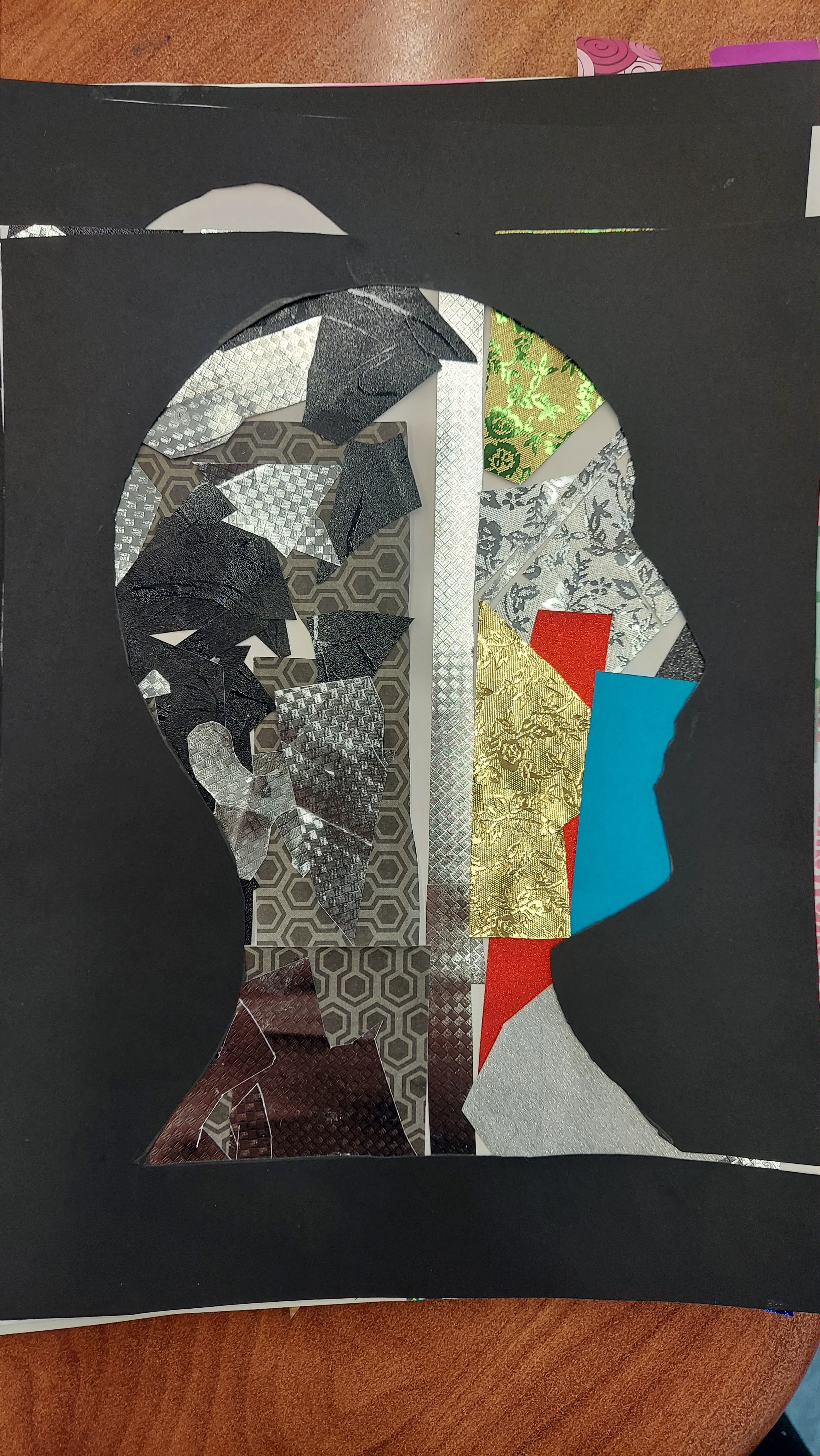
Here is my finished version from both this year and last year. Do they feel different? In what ways? What would you imagine has changed in my life when looking at these 2 versions?


Examples from students last year:


Friday, May 31, 2024

Sunday, May 19, 2024

APR Game Tournament / Culmination

Culminating Tournament Play-By-Play


1st 5 minutes of class: 

Time to set up your game and make sure your Rules are written clearly


Move to different games - 30 minutes

Read the rules and figure out how to play the game in front of you - if you finish early, your group gets to come up with alternative/additional rules to make the game more challenging

*in smaller classes (5 or fewer games) have each group do alternative rules - add 2 to 5 minutes for this portion

Entire group moves to a new game once 5 minutes are up - continue till most of the games are sampled - 6 games max for time to process. Once this portion is finished, groups head back to their own games for the final part of our session.


Final Round - 10 minutes

Questions each team must answer to select their snack prizes:

1. Name 1 thing that you love about your game and 1 thing you would do differently next time.

2. Name 1 thing you enjoyed about this program and 1 thing that didn't work for you

3. Name something you would have liked to do that we didn't get to?


Sunday, May 5, 2024

Game Design 3+4 @APR Making it in Real Time

Day 3 Process:

With the materials provided, everyone works together in their group to begin laying out the structure of the game and its environment. Use construction paper shapes to help cover your board and create structure quickly - once the main structures are laid out, then more sophisticated details can be added. 

***Remember, playability is more important then your game being pretty***


Here is the teaching artists + admin team's version after 1 @45 minute session:


Here you can see details starting to be added, and the next layer of clarity about how to play the game being added as well. There are now clear spaces, distinct moods for each world and an X marks the spot where players pick up essential life experiences they will need before they can enter the NYC floating in the middle (where we all came from, and where we all have met).


Detail shots of each world:


Day 4 Process:

Game pieces, cards, dice etc will be available to give your games a test drive - all final details need to be worked out and a page of rules must be finished for us to begin playing your games without you for our culminating session next week.