Friday, November 6, 2015

every tool has a genealogy


Post class reflection on the History/Process of Deconstruction and where it might be headed:


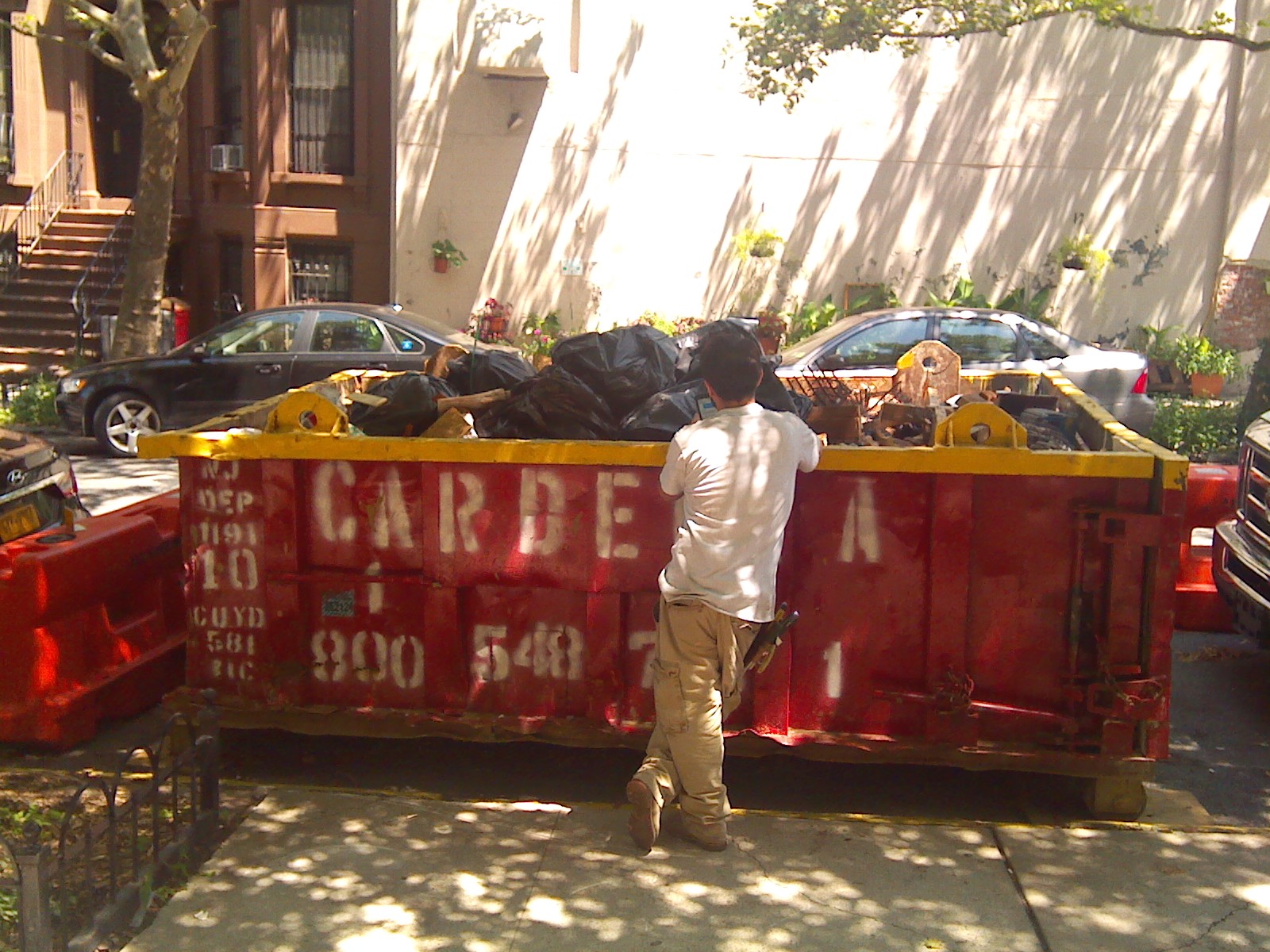
It strikes me as hugely important, the ways in which buildings were brought down much earlier in the growth and development of modern civilization - the idea that people paid for the opportunity to be involved, because almost every aspect was salvaged and sold immediately, that the building's components were considered valuable even if the building itself was no longer meant-to-be. How breathing a new building into being involved exhaling an old building and that something could coalesce and disperse without degrading some other aspect of the life cycle of the urban landscape.

But what really changed?

Human Labor began to require expenses previously uninvolved in the process? Or was it the development of technology and new kinds of building materials? What was driving the American frontier that made creating mechanized muscle so profitable? As the scale of cities and human potentiality also expand, how easy does it become to un-see the cellular matrix, to consider the brick and the human vessel for mechanical force as necessary but essentially un-special units of any structure.

There was a time in our past where history was considered valuable, in people and in things, institutions and ideas. I have no idea where the shift was - that made virginity the ideal - that an all consuming drive for the newest thing means that once put into circulation, everything we come in contact with is depreciating in value to society. In our attempt to avoid the necessity of entropy, we facilitate the speed in which it takes hold. It is like we are choosing to define the world not as a system fluctuating around us, but as a system slowly dying.

This idea of modular construction that allows complete break down and reuse of entire structures may be something that gets looked back on with disdain, like the boxes scattered over the landscape from the modernist movement - sometimes it is important to see the brush strokes in the painting, since it gives clues about the artist's thinking, the specific problem they might have been working out in the paint, about shadows and reflected light, about what color laughter in the eyes might be. If we looked at every piece of the mundane process of constructing things, buildings or human beings as if every moment and particle were somehow divinely inspired, how might that affect what they grow up to become? If we could feel respect for each brick and the job it will do, would that respect extend itself to the individual placing that brick into the skin of its building? Are they common laborers or Priests shaping Matter, carving our history onto the earth?

But what of the Architect? Where does he live in this painting? What is the nature of the piece of music he is conducting?

I think it depends on the nature of the building. If longevity is involved in the thought process, than the utility of a building will have to shift along with time, or get swept away by the future. How would we interact differently with space if it was designed to ride the waves of human need and expression? Does it mean that the essential creator of that design is lost in the fluctuations? Are you any less an artist if what you have made is rich earth for people to grow in, rather than monuments to god, ourselves and posterity? And by offering the option to co-create space, how does that fold in the inhabitants - how they might claim a space, relate to or identify with it, and how they might also consider the people that helped craft it?

How can construction/deconstruction be an invitation, rather than an attack?


Friday, October 30, 2015

The plumbing talking in its sleep.


Some interesting things about Havana via Wikipedia:
The national government does not have an official definition of poverty/People living in slums have access to the same education, health care, job opportunities and social security as those who live in formerly privileged neighborhoods/In the 1980s many parts of Old Havana, including the Plaza de Armas, became part of a projected 35-year multimillion-dollar restoration project, for Cubans to appreciate their past and boost tourism

So it sounds like housing standards don't actually tell you about the standard of living for its occupants in Havana, that they might not even have a negative category for people to feel trapped inside of as far as where they fit into the economy, and there is a strong sense of positive cultural fabric for the people in/from that city to feel connected to and proud of. It makes sense to me that Urban Renewal cannot live here. Taking things down makes sense when things stop working - but what if they haven't? I don't think we all need to live in the future together, that it's hard to appreciate how far we've come if we've wiped out everywhere we've come from. It seems like a high functioning slice of history, as opposed to the dying behemoth of Detroit. Modern ≠ Better?

As the scale in which we do things, inside of an increasingly globalized economy, gets larger and larger - I think Detroit can be considered a boomtown at this point, one that outlines the rise and fall of the automobile, of the factory, which died to birth modern corporate monsters - cutting costs to shift production overseas at the expense of local economies. Who were those factory workers when not producing things? What cultural identity did they have left after industry collapsed in the Rust Belt? With no roots to cling to/help stimulate growth of a new kind of identity and very little history to tie anyone to that place, it is quickly becoming the largest ghost town in America. It almost resonates in the way Chernobyl does, with our deep desire to witness it as nature reclaims this specifically manmade disaster - there is a lesson in the rotting carcass of the city, with scraps of flesh and meat that still hold the pinkish tinge of life.

We did this.

I do think the wound/Detroit is still fresh enough to feel the heat from its history, but maybe it is too close for us to really assess the nature of the damage. To do so would mean admitting some deep and true things about the system we've set up and what we had to buy into to have manifested that particular reality. That seeing human labor as a mechanical function and matter of efficiency and profits, instead of living breathing beings filled with dreams and desires and basic human rights and needs is a particular blindness unique to the corporate beast, and feeding it will only extend the landscape that Detroit deteriorates into.

Katrina was an act of nature or of God, but is a foreign Other we can band together against, something that shows us exactly where our weaknesses are to 'intruders', and has forced us to recalibrate our relationship to the landscape, to consider how we can work in tandem with rather than against it. As so much of our history was washed away in the floodwaters, the things that we rebuild there mirror what we valued about it, while giving us room to build a hybrid creature of past and future. The story we want to tell our progeny. Like most of our stories, it will live in half truths until everyone is unable to escape the inherent responsibility we have had in manifesting these Acts of God/Nature with increasing frequency.

I Am That I Am.
 
Natural Disasters are not unlike our own immune system I think, whether it is fire or flood or wind, it sweeps away the underbrush, the insubstantial, the not-meant-to-be and inspires new growth, hardier growth, and maybe does the thing that we cannot - rips from us the things that used to be a part of us, like a parent pulling out your loose tooth.

In dream analysis teeth represent our roots. But space needs to be made for more mature ones to grow in their place.


Friday, October 23, 2015

These endless catacombs of self-reference.


conflict (v.) Look up conflict at Dictionary.com
early 15c., from Latin conflictus, past participle of confligere "to strike together, be in conflict," from com- "together" (see com-) + fligere "to strike" (see afflict).


In the first stages of development after we are born, we begin to define ourselves in space - it is pushing against things that lets us know ourselves, and I don't think that ever changes, that what we come up against shows us who and what we are. What we really believe in. How what we risk can also reveal what we value. How what we attack can tell us what we are afraid of admitting about ourselves most. And finally, how necessary discomfort is to inspiring change.

There exists a number of primal urges for survival that we share, especially predictability, certainty, structure. There is a refuge in rules. Rituals, habits, landmarks are all ways to synchronize ourselves in time and space, moving to the metronome of our breath, but maybe without conflict it is hard to tell where we stop and another person begins. I have a hard time arguing that war and injustice are unnecessary when they have taught us so much about ourselves. That maybe there is something uniquely powerful about being stripped down to your core, so you can build a house that YOU want to live in, on a foundation you believe in - and not be constrained to the limitations of its previous identity. Maybe the idea of catharsis is deeply intertwined in destruction of anything, but manifests as violence against other, since destruction of our own identity calls up the question of what we have left to orient ourselves around - and in choosing what we value automatically implies a devaluing of everything else.

Is there a way to honor something in its destruction? Like a Viking funeral, can we also dispatch of our history with reverence? To honor the life of a fallen building and all it has silently witnessed of our trials and tribulations? Mourning the death of an identity is necessary. Healthy. Valuable. Cathartic. Maybe extending an invitation to affected communities to be participants in the mourning of that symbolic relationship and the shift in their emotional landscape might make letting go just a little bit easier.

I recently learned that in the Torah, there are prayers devoted to people who have committed suicide - and the language focuses a lot on the individual having nowhere to go, nowhere to turn... that they didn't have space.

Maybe there is deep psychological value to considering how we orient ourselves in time and space, how it can help us, as well as how it can hold us back, and how it can be used against us. How making space can be an invitation rather than an attack. How it can honor the past by being a sacrifice to the future. That an inhale is just half of a breath, and exhaling its necessary conclusion to make space for the next one. How choosing what we keep and letting go of things that no longer serve us can be a powerful language for expression of Self.


- from an article about the evolution of rap

''There was a sea change in organizing when [NWA’s] “Fuck tha Police” came out. Before, even dope dealers I knew had this feeling, like, the police are the good guys. “Fuck tha Police” changed that orientation; it kind of chronicles that. [Their songs have] got misogyny, they’ve got glorifying murdering each other, things like that, because it comes out of the culture that capitalism has created. I think it’s important for us not just to edit the culture that capitalism creates, but to create the material basis for a culture that we want."

 
- Boots Riley
an American poet, rapper, songwriter, producer, screenwriter, humorist, political organizer, community activist, lecturer, and public speaker


Sunday, August 9, 2015

and I said to the star, "Consume me".


As my yoga apprenticeship draws to a close, I am engulfed by waves of feeling that are completely unfamiliar to me. I have one class left, and am already mourning what may be lost in my day to day. I had thought my previous class was going to be hard in my emotional state, but as soon as I walked into the studio, the wash of calm came over me, and I was too filled with a sense of rightness to feel anything else.

Having the break from construction work, from constantly having to ignore my body's needs to serve someone else's purpose, the teaching and taking of yoga is such the opposite - reminding self and others that conversation with body may be the most important conversation of our lives - the push and pull in such opposite directions feels almost like choosing between life and death in a very real sense. And that starts to bleed into other aspects of life, like expression of creative self, of feeding curious, hungry parts of self, of inspiring growth in self. So I have looked with clear eyes on other parts of my life that I am giving time and energy to, but will not render out into something I want to be or have in the future. Sometimes we need things, like habits or jobs, to keep us moving forward into some kind of future and sense of security. But there comes a time where those things can begin to hinder us, because they are easier to continue doing, than to explore our boundaries and move beyond them. The yoga reminds me how much more is to be had inside of my own body - all of the things we aren't taught to explore or question or listen to. If, the more we do something, the more we become it (the mind AND muscles develop neural pathways and bulk up in the areas we exercise the most), the feeling of rightness when I walk into a yoga studio makes me increasingly aware of the opposite feeling in other places. Of how much more there is to be had in Life.

So I have been slowly turning down the freelance jobs I get offered that I am more than capable of doing, but that feed a future I am disinclined to be a part of. A lot of the entertainment work fosters aspects of the economic and cultural structures that I am finding myself fiercely against, and what is perpetuated in real lives that feed that machine, which only cares about money. But as I let those things go, so too do I lose the power I had to fulfill other people's needs, to be filled with and validated by achieving other people's desires and deadlines and budgets.

And the people that formed vast networks of support and deep understanding of the worlds we crawled around inside of together - the farther I remove myself from those layers of knowing and getting through the bullshit together - the less connected I am to those webs of people, as the similarity of our priorities and experiences evaporate. There will always be love, but our beliefs about our needs and desires are suddenly diametrically opposed. Awareness of the subjugation of our flesh and time and soul incites a revolution against those things, and not everybody is ready to fight that battle. The cost seems too great when you have learned to look at the value of your flesh as relative to the value of money.

Those things have meant life to me.

I learned so much about how to wield my body with power, how to use my words to move small armies of men with precision. I was able to find things that were stripped from me in childhood and rebuild a powerful seat for my soul. But redefining my sense of power means allowing myself to be emptied of previous concepts. Refusing to be defined by other people's needs means I have to let go of the feeling of being purpose driven by them. I must become a Vacuum, before I can be filled my own needs and my own purpose.

I never anticipated feeling so uprooted, because I have never had a sense of being rooted to something. The sting of feeling disconnected, untethered to time and space, and my sense of where I exist in proximity to those things has become suddenly overwhelming. But like the practice of pouring ourselves into asanas (yoga poses), something that shows us how we respond to intense and unfamiliar territory - I have always backed off too quickly to reach whatever lessons may lie on the other side. Missed out on the strength that may be born from learning to feel without running away. Of course I can't take anybody with me on a journey inside myself - turning inward is a necessarily singular path, even if I mourn the loss of what I once had. There are different rules in this game than ones I have gotten used to playing, so I have to let my habitual reactions fade away as they do not serve me here. The ways in which I communicate needs and desires will inherently have to change, as I navigate a landscape that has no map, and all of the external images and associations I've consumed in my lifetime can provide no assistance to an internal compass.


We must unlearn the constellations to see the stars.
- Jack Gilbert


Tuesday, June 30, 2015

"I" was a performance not an essence.

Time pressure had narrowed their 'cognitive map' ; as they raced by they had seen without seeing.


Running into a café to grab a latte, I noticed an old stained glass window hung on the wall like a picture. As I waited for the espresso to brew and the milk to be frothed, I thought about what that out-of-context window meant in the larger scheme of the atmosphere, of attitudes, of life.

Sure it fulfilled some generation specific fascination with all things 'vintage' in the hipster world of re-appropriation, but having spent so many years building things with people who will never be thanked for their participation, let alone noticed by the kinds of people that consume the things we produce, my heart swelled for a second. This piece of functional history was given the opportunity to grace a wall in the manner of artists. There are few names we know in the world of metalworking or construction, but someone allowed this errant piece of craftsmanship imply that an individual did craft this thing and it was beautiful in the way art is beautiful.

Even though sunlight will not pierce its glass and give color to the dust motes in some child's memory, something about removing it from the structure of houses, which we wear like skin, ours alone - it allows me to contemplate the individual who made this thing. To wonder if he liked his job, to respect the cleanliness and straightness of his lines and soldered edges, to guess at the time this piece was born by reading the weathered wood framing, and to place his meticulous, rough hands inside of its history.

It is a portrait of its creator. It is a depiction of the place where drudgery and art define the life of a man. Just as it exists everywhere around us, from carpenters to garbage men, so many unsung heros in our day to day that have jobs too boring for us to remember or acknowledge. When I look at this piece of salvaged architecture on the wall I am filled not with thoughts or opinions, but a strong sense of a person, faceless, focused.

And hands.

Sure, steady, meticulous, patient, rough hands.


if ritual is art, then it is stretched over the frame of habit.

All art is autobiographical. The pearl is the oyster's autobiography.

Pearls are commonly viewed by scientists as a by-product of an adaptive immune system-like function.

Monday, June 29, 2015

tiny rectangles of infinitely reproducible emotion


In some of the discussions about human development in my yogic study of the body, our observations of babies has brought up a theory of how an infant begins to discern reality - mouth to nipple is the first true and real thing in a new human's experience of world outside of womb. It will be some time before their eyes come to focus on objects, they have little to no muscular awareness of fingers and feet, playing with a toy is the earliest form of training the hands to work cohesively together.

So nothing is real until it has been perceived by our mouths. Tasted. Given a multidimensionality that gets lost as we get older, as other sense organs gain dominance over our brain's real estate. It is the tasting of our own hands that eventually empower our fingers to define reality-at-a-distance, and as we get older and begin to touch less, as physical/cultural boundaries regarding touch are instilled in us - we rely more on seeing-is-believing.

As an artist, I have spent years and years honing my eyes as a tool for measurement, drawing is the art of learning how to really SEE what is there, and our visual relationships become as refined and intimate as touch... but at what point does the experience of seeing and recording 'reality' become an act of Ego, rather than an exploration of true and not true? At what point are we filled with the expectation that the marks we make on a page must essentially be reality, so every stroke becomes a desperate attempt to prove our knowledge, rather than actively posing a question in the form of flesh and shadows. How each finished piece is then viewed as a final answer, rather than an exploration of form and space and boundaries, as well as our relationship to them.

One of my favorite parts about teaching yoga, is that we are so used to answering questions and doing things right, that we forget how much everything around us is a conversation, especially the dialogue we have with our bodies inside the yoga studio. I like to talk about how once we were so new, we didn't use words to think our thoughts and feel our feelings, and even though mind wrapped itself around human language, body still communicates differently. Breath is a powerful way to break that language barrier, I tell them. We turn asanas into statues, to prove we are strong, instead of exploring the subtle shifts and compromises of flesh wrapped around muscle that wraps around bone. So focused on an outward proof of our validity, we forget that we come to the mat to find something more, something deeper, something new. To change what is true. To question what we perceive as true. But if truth in the body is so purely an internal experience, the strongest connection I've found to verbalizing the all encompassing opening of awareness to body is that infant relationship to the world around us. Watching these babies roll and fall and crawl and taste through the world reminds me that we are designed to explore, that we have forgotten we are allowed to constantly question the nature of reality and the world around us, and that we can do so from a place that is not fraught with judgment and expectation.

How many other aspects of our lives could benefit from a lens of newness, of pure, unadulterated exploration?

A close friend of mine is often the subject of my exploring hands. Affectionate, friendly intimacy of overlapping space and belief systems, experiences and expressions of self, my hand on his back is like folding into downward facing dog, where my shoulder blades slip into the space carved for them, as they learn to free themselves from the intense relationships contained within the shoulder girdle. Home. Having spent time watching these babies bring everything to their mouths without a thought, it reminds me of the instinctual desire to replace my hands with my mouth in the most innocent of moments, so similar in my mind are those forms of touch and the feelings behind them, I have to physically catch myself. Watching the magnetic hand-to-mouth gestures of the sprawling, drooling life forms in these observations, I feel I recognize on a deeply intimate level a magnetic hand-to-mouth pull that is so fierce and new to me that perhaps I allow myself to resonate too deeply with this earlier stage of life.

It makes perfect sense to me, that exploration through my fingertips or my tongue and teeth and lips, can free me to disregard the hierarchy of my eyes and ask the kinds of questions that only have wordless answers, a conversation composed of salt and breath instead of words and rules and expectations. That inquiry via smell and taste and flesh boundaries are important in defining realness on multiple planes of existence, to know the fullness of another being's dimensionality in space.

To know truth from projections, real vs hologram.


One of the people leading the observation/post discussion responded more sharply than I had anticipated towards my interest in bringing the baby's newness into adult life, cutting into my romanticized notions of the baby experience, reminding us how knowledge would have to be relinquished to be in that place, that they are moving through the world without conscious awareness yet - how returning to that state involves a letting go of what we've learned, to be what we are now. It must seem bizarre, sitting inside our armor, built up from the wars we've fought to survive and flourish to look at a place where emotional callouses aren't built into the smooth pockets of baby flesh yet. It seems natural to mourn our own necessary loss of innocence, to want to crawl back to a place where our only responsibility was to taste everything around us. I think that desire manifests often in our cultural awareness, a constant desire to return to Eden, of innocence, in the unbroken, something contained within virginity of all sorts, from gadgets to people. But those soft creatures, the babies rolling and falling and drooling around us are only possible because we are there to protect them until they can wear their own armor. I do not touch my mouth to his skin because there is an inherent responsibility inside of that action, a reality that will never be as weightless as a toy in a baby's mouth, or as simple as when I kiss my puppy's face.

I need the knowledge of anatomy to draw a human, so I can communicate through form and gesture a myriad of other things, I need the cultural history of words to speak the things I believe, and I need the history of knowing those things inside of other people's brains for the things I do and draw and say to be received, to respond and be responded to, to have any kind of power or presence. And I will continue to let my fingertips say the things my mouth cannot verbalize or texturize yet.

Boundaries are powerful too.


You set me straight, just like an arrow,
Until we lay, caught in the afterglow,
My world was gray with all the others,
Until you came, you showed me colors

Tuesday, June 16, 2015

weigh anchor in the harbor of my thighs


I was searching for the tall green-and-white subway stop markers, that indicate a stairway that descends underground, while a few MTA workers screamed 'NO' and pointed. Flustered from the noise they made, I moved anxiously - and nearly stepped off into an abyss. What I had thought were subway markers were actually the top of a roller coaster, its steel bracketed frame fell steeply away from me, plummeting to a depth I couldn't gauge in my surprise. Stepping back to glance around for the true subway, the MTA workers yelled and gestured wildly to my right, across the park towards ancient semicircle concrete steps. I decided to take a few minutes to explore the area, since I had visually located the correct subway entrance. One of the MTA people close to me misunderstood my body language, assuming I was still lost (or stupid) and started pointing as he hollered in my face. He fell silent with shock as "Leave Me The Fuck Alone" fell out of my mouth. No one was going to tell me when and where I should go, I was distracted by something, and it was MY life and MY time to wander and explore. It was their noise and violent hand motions that had caused me to almost step off a dangerous path in the first place, I was not going to let them rush my process, my curiosity or when I chose to arrive at my destination.

As I descended the stairs, I realized that they wrapped around a forgotten, overgrown public pool. Thick trees grew along the sides and reach out across the water to caress each other from opposite sides, and the water was cool and blue as my grandmother's pool when I spent all my summers brown and smelling of chlorine, even though scum floated on the top, in the deepest shade of the trees overhead. I waded in towards the cool darkness in the bright of day, to the woman I knew was waiting for me, chest deep, her long hair swirling around her, like when my hair was long, long and golden, when I used to pretend I was a mermaid in my grandmother's pool. My short, dark bobbed hair now seems like a symbol, the contrast is so highlighted. My conversation with the long haired young woman is knowing and familiar, she is like a sister to me, though she looks more like me when I was still fresh faced, than my sister ever did. She had warm, encouraging things to say to me, about my direction, assuring me in the face of my chagrin at my circumstances, but her face expressed no emotion, her eyes have no pupils to make eye contact with. The sweetness of her words hit me so sharply it almost felt like pain and my arms wrapped around her for a farewell embrace, a loving embrace. The cool skin of her arms hug me back, though her face does not. The intensity of moving on, for her forgiveness as I said goodbye filled me with so many points of sharp bright feeling that I couldn't hold back sobs that wracked my body so fiercely I woke up in bed, tangled in the sheets, still sobbing.


Years and years ago, a psychic who used symbolism to communicate her visions told me she saw me wade into a pool of water, and before I got waist deep, I stepped on something incredibly sharp. I backed out of the water the way I came, and for a long time only circled the outside of other pools of water, never getting past my ankles in any of them.

For years I have not dreamed, as far as I can remember, and the deep, dreamless sleep afforded me by doing physical labor have felt like a gift. But recently, dreams are surfacing. This was not the first time I have seen my subconscious draw parallels between subway trains and roller coasters, and they always involve MTA personnel directing traffic in some frustrating/distracting way. I have been in pools of water before, and for some reason, I find direct or indirect references to my grandmother floating in the fabric of the dream. As I notice images manifesting over and over, maybe it is important to pause and study them a little bit closer.


We can only ignore ourselves for so long.


Thursday, May 7, 2015

a selfie made from found objects and reflected light


I have spent the past 10 years doing yoga and embraced my place in the labor industry as penance for not being better, stronger, more capable, more brilliant - the pain in my belly and thighs, my shoulders and my spine as lashes on my physical body to punish spirit for all the things it could not make my body do, its lack of control on the physical plane. For my feelings of helplessness and powerlessness that I have carried since a small child growing up in dangerous and unhealthy circumstances. For all of the times I could not speak up for myself. Because I deserved the pain. Because it was the only time I could feel anything.

Of course I didn't want to share any of this with anyone.

Watching one of my best friends sinking into Half Pigeon yesterday during dialogue practice, something changed. Looking at her body, and talking about the discomfort triggered inside of the hip, feeling my own experience inside of someone else's body - I realized that it was gift being given. That moving the body into places where it feels a lot, whether Half Pigeon or Chair Pose - is an act of love. Is a cry for freedom from the constraints of our daily lives, of joints from flesh. That breath IS the language with which we comfort and communicate importance to the body, since the words we think inside of our thoughts have little to offer to this conversation, the most important conversation we will ever have. The freedom and power of allowing the body a safe haven to feel, to grow, to explore its boundaries is something that society and the education system rob us of on a daily basis - and every single person in the room with me is committing an act of revolution.

I understood what it means to pray for the first time yesterday. How a yoga practice can be so much more than a battle. It's a song. Its a story that we are constantly rewriting, and for once I get to be the hero, instead of the villain.

I see my place, finally. I'm a Liberator leading bodies (safely) to war against the accepted, the expected, the required. My task is to empower our fullest expression as an act of love, which is inextricable from the nature of revolution, whose ideal battle ground is the field of consciousness.

Last night's class, there was no nervousness. My dialogue is strong because I know why I walk into the studio. I know what story I want to tell, even if it is told through the tone of my voice and the touch of my fingertips. That bodies may hear what minds cannot, and that bodies respond because I am giving them a stage on which to sing their own songs, and a captive audience to let them know they are being heard.


I think this is what it feels like to be in love.


"The deeper that sorrow carves into your being, the more joy you can contain."

Friday, May 1, 2015

and the blues came walking like a man


“We revolt simply because, for many reasons, we can no longer breathe.”


"Arjuna is overcome with self-doubt about the righteousness of the war against his own kith and kin. He is distraught at the thought of having to fight with his friends and family. It was then that Krishna took charge and explained the necessity and inevitability of the war to Arjuna."

 
Krishna could have cut to the chase and just handed Arjuna a mirror. I bet everyone would have disappeared from the field of consciousness in a flash, and he would have been left alone with himself.

Having Johnny as my tandem partner made the gap I felt I had to bridge between myself and everyone else almost non existent. Its easy to compare myself to the giggly, high pitched, little yoga girls in my classes, and within the ranks of yoga in general, and see all the ways in which I lack femininity and softness... there's a roughness and rawness about him that I wanted to rub up against like a cat, because it felt so familiar. It may have been the first time I've felt like I was on level ground since I handed in my tt deposit. The first time I could put my back down. Respond with something other than the chip on my shoulder. Problem solve like I was on a jobsite. Remember with the knowledge inside of my bones that I was there to do a job, and I was going to finish it. 

And its nice to have someone call me out. As much as I feel constrained by my circumstances, there are other issues I thought I had effectively dealt with that have finally rubbed me to the point of chafing. There resides a dragon I fight on a daily basis. Its name is Commitment. I am afraid of the gravity behind committing, so I don't. Relationships naturally define, and I'm afraid of being put in a box I don't believe I belong in. After my previous tandem, I saw what I become when I don't allow myself to commit fully to a task. And for some reason the notes I got in my first two tandems about really effectively building from ground up have evaporated, even as my relationship to time gets a lot stronger. Where did those words go?

I will be a poet someday. But I realized, watching my class filled with beginners that if I can't help them build the buildings, there is nowhere for the poetry to live inside of. The pendulum found something else to give it momentum. Things I thought I had strong were not there when I needed them. I still made it to the end. Nothing exploded.

The mundane is profound too. Repeating cues is valuable. The work is happening inside of their bodies, and I have to accept that I am not responsible for their experience, I'm just drawing the outline. I can be true to the yoga and true to myself at the same time because I believe in what I'm participating in.

The yoga is enough.


Because if you're gonna come up short
On a request like magic beans
You better be sure
The first part of that meal
Means something